Your teenager seems withdrawn lately. They’re spending less time with family or friends, and more time alone in their bedroom. Their personal space suddenly looks …

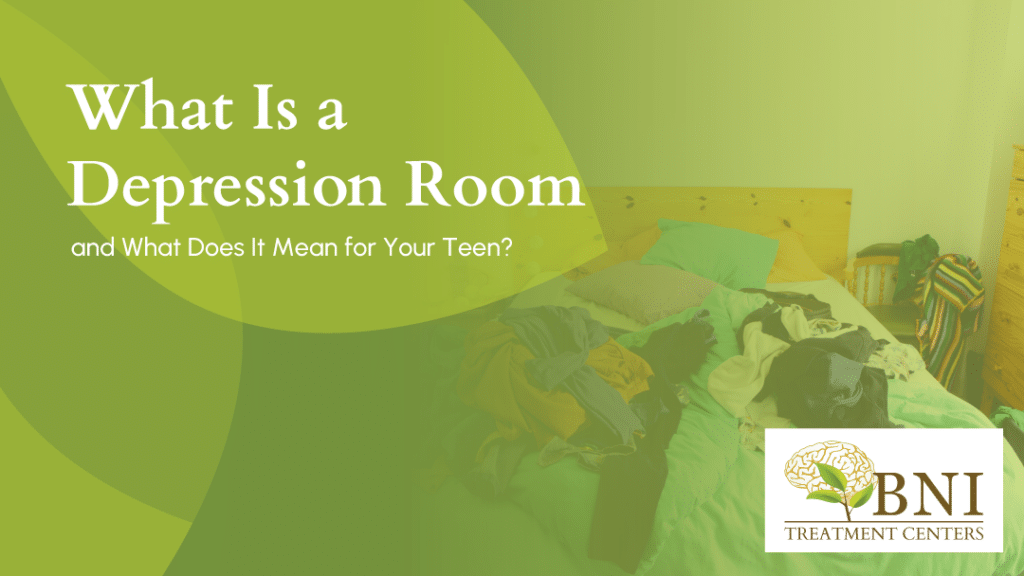
Your teenager seems withdrawn lately. They’re spending less time with family or friends, and more time alone in their bedroom. Their personal space suddenly looks like a mess, and they can’t seem to clean up after themselves. You can’t help but wonder – is this just a part of growing up, or could it be something more?
Nearly half of California adolescents experience serious mental health difficulties each year, with many reporting symptoms of depression. Parents are well aware of this epidemic and can find themselves searching for explanations for their child’s behavior.
At BNI Treatment Centers, we know what this is like. Our laser focus on teen treatment and mental health gives us unique insight into the challenges of adolescence. Today, our goal is to educate, answering a common question many parents ask: what is a depression room?
Depression is often linked with poor hygiene. This can manifest in personal care, with unwashed hair, unshaved faces, or generally poor dental and physical cleanliness. However, this can also be displayed in your teen’s environment, leading to what is sometimes referred to as a “depression room”.
This is when your adolescent’s depression causes them to either lack the energy or the willpower to clean up after themselves, causing them to live in a messy and disorganized environment – even if they want to make a change. This isn’t simply them being lazy or unmotivated. In the case of a depression room, teenagers want to clean up but find it overwhelming. This is a consequence of underlying depression and the psychological and physical toll it can take.

While depression is a serious concern for adolescents and their parents, many teens have messy rooms as a part of growing up. Even if your teen has a messy room, that does not necessarily mean they have depression!
However, depression is directly linked to fatigue and a lack of motivation, and can heavily influence your child’s cleanliness. Depression’s impact on motivation and energy levels can be profound. Depression frequently disrupts sleep and can spike stress levels, causing fatigue and exhaustion. It diminishes brain functioning, leading to mental fog, poor decision-making, and feelings of apathy or worthlessness. Those who live with depression sometimes feel they can barely move, let alone get up and clean.
While more research is needed in this area, some studies find that cleaner environments lead to better health and higher productivity. This suggests that a messy environment can play a self-reinforcing role with depression, worsening its symptoms. As the symptoms of depression worsen, your teen loses even more motivation to clean – which only further contributes to the underlying depression and continues the cycle.
Critically, there is a distinction here between typical teenage messiness and a lack of cleanliness caused by depression. Many parents can be left frustrated by their teen’s apparent laziness, or worried about underlying mental health conditions. To understand the distinction and more accurately assess your teenager, consider other symptoms of depression. Here are some questions you can ask yourself:
These symptoms in isolation may be typical negative emotions that are a part of growing up, but taken together can indicate depression. If you suspect your teen may be living with depression, it’s important to get them a professional diagnosis.

If you believe your teen is living with depression, know that recovery is possible. While depression can take a different shape for every person, requiring a flexible and personalized approach, depression treatment for teens is available. By working with trained psychiatrists who specialize in teen depression, an individual treatment plan can help reclaim their future and their happiness.
That’s why at BNI Treatment Centers, our trained psychiatrists are involved at every step of your teen’s recovery. We take a unique and individualized approach to care, with 24/7 staff available to help your teen in any capacity they need. To learn more about our comprehensive and evidence-based programs today, connect with us at (888) 522-1504.
BNI Treatment Centers: Science-based, evidence-backed, compassion-led.
Q: Why does depression make it hard to clean?
A: One of depression’s primary symptoms is a lack of energy and motivation. As someone’s room gets messier, it becomes harder to find the energy to clean it. Additionally, depression is linked with low self-worth, and someone living with depression may not care about their living environment.