Picking a Adolescent PHP, or partial hospitalization program, for your teen is a big decision. The right match keeps your child safe, helps them feel …

Picking a Adolescent PHP, or partial hospitalization program, for your teen is a big decision. The right match keeps your child safe, helps them feel calm, and moves them forward at school and at home. Three anchors make the choice easier. First, look for genuine accreditation from reputable bodies that thoroughly review quality and safety. Second, ensure that the staff includes child and adolescent psychiatrists and licensed therapists who work as a cohesive team. Third, ask how the program measures results and shares them with families in clear words. In Greater Los Angeles, families often use a PHP as a step down from residential care or a step up from weekly therapy. Later, many teens move from PHP to intensive outpatient, or IOP, and then to regular outpatient care. This guide gives you a simple, step-by-step way to compare programs and ask the right questions. Keep reading to build a safe, steady plan that fits your teen and your family.
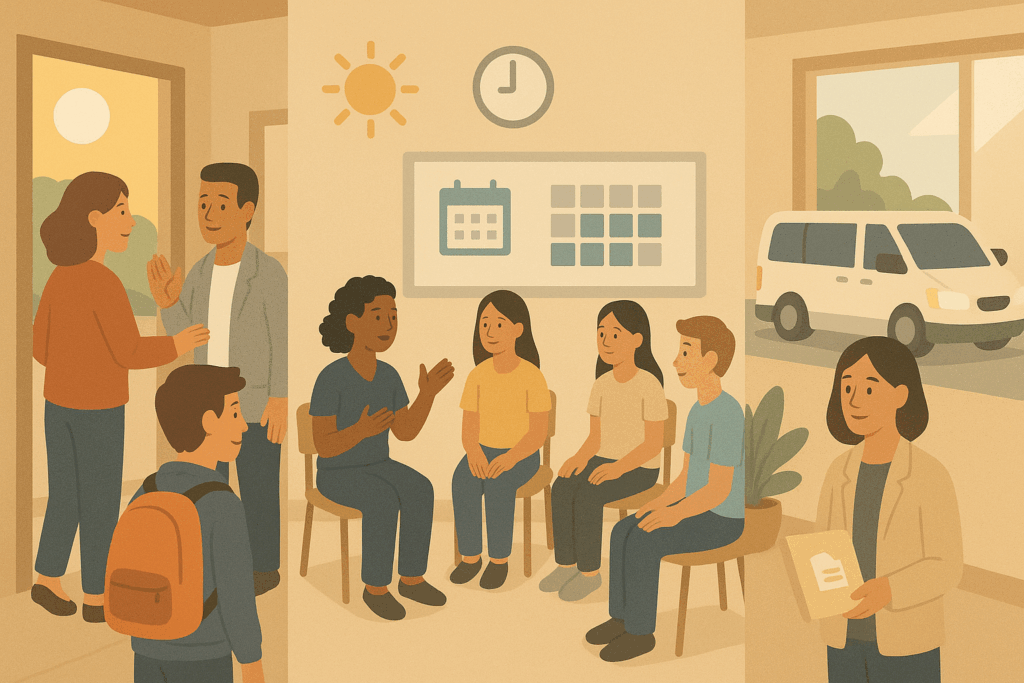
A PHP is a full-day treatment program. Your teen goes to school for several hours each weekday but sleeps at home at night. A PHP fits when symptoms are serious, but a hospital stay is not needed. Teens join therapy groups, meet a therapist one-on-one, see a prescriber if needed, and take part in family sessions. Federal guidance lists partial hospitalization and intensive outpatient as important levels of care that support recovery for youth and their families.
A PHP is often part of a simple path. Some teens start in PHP. Others step down to PHP after residential treatment. Later, they move from PHP to IOP, then to weekly therapy as symptoms improve. The point is to match the level of care to your teen’s needs and to change the level as safety and function change. National child and youth behavioral health guidance supports choosing the least restrictive level that still protects safety and progress
Accreditation is an outside review of quality, safety, and ethics. It is not a paid badge. Accredited programs meet detailed standards and pass regular surveys. Two well-known accrediting bodies for behavioral health are The Joint Commission and CARF International. Both list how they evaluate organizations and the types of services they accredit, including care for children and adolescents.
When you compare programs, ask for the exact name of the accreditation, the current status, and the date of the last survey. Many programs display the Gold Seal from The Joint Commission or the CARF accreditation seal. You can also check the accreditor’s website to confirm a program’s status. Accreditation does not replace good clinical work, but it shows that the program meets baseline standards and is open to external review.
Teens are not small adults. They need a team trained in child and adolescent care. A strong PHP team includes a child and adolescent psychiatrist, licensed therapists, nurses, and education support. The psychiatrist oversees diagnosis, medication decisions, and safety. Therapists lead groups and individual sessions and coach parents during family sessions. National resources explain the need for developmentally informed care for children and adolescents and why families should be partners in the plan.
Programs should also utilize proven therapies for teens, which often include cognitive behavioral therapy, dialectical behavior therapy skills for emotion regulation and safety, motivational strategies, and family-based treatments. Reviews support these methods for youth when delivered by trained teams.
Good programs track results. They measure symptoms, safety, school attendance, and daily life skills from start to finish. They also check family stress and caregiver confidence. You should be able to see what the program measures and how often. Programs should share results with you in plain words and numbers. Federal quality resources emphasize safe handoffs, clear plans, and shared information across settings to reduce errors and improve care.
When you read outcomes, look for change over time and follow-up after discharge. Ask how many teens complete the program, how many step down to IOP, and how many return to school. If results are not available, ask what the program is building to track and how it will share that with families. The goal is to maintain a steady function at home and at school, not just fewer symptoms.
Safety plans should be in writing. They should name warning signs, steps to take, and who to call after hours. For teens, a calm routine for evenings and mornings is extremely helpful. Programs should also establish simple tech rules at night to improve sleep. Sleep affects mood, attention, and learning in adolescents, so setting good habits is part of care for many teens.
School support is key. Many programs include study time and school coordination to help teens stay on track and avoid falling behind. A PHP should give your teen time and space to keep up with classes and plan for a smooth return to school. This lowers stress and supports long-term success. Programs that coordinate care well across steps, like PHP to IOP to outpatient, also reduce risk during changes in level of care.
A strong PHP should connect smoothly to an IOP. PHP gives a full-day structure. IOP offers several sessions per week, allowing for more time at home and school. The handoff should be warm, meaning that records are transferred with your teen, and the next start date is set before PHP ends. Federal transition tools stress that clear handoffs reduce problems and stress for families.
Programs should also explain how they decide when to step down. Decisions should include safety, symptoms, family readiness, and school function. If symptoms rise, the plan should allow a step back up to PHP or even a higher level if needed. Clear steps help families feel safe as support changes.
Inside a PHP, your teen should learn and practice skills. Cognitive behavioral therapy helps change unhelpful thoughts and actions. Dialectical behavior therapy skills help individuals manage big feelings, promote safety, and foster healthy relationships. These methods have research support for adolescents when delivered by trained teams. Trials show DBT-informed care can reduce self-harm and improve function in teens. Reviews show that family-based treatments reduce substance use and improve family life for adolescents.
Family sessions matter at every step. Parents learn calm communication, fair limits, and how to coach skills at home. When family stress is high, these simple tools help the whole house. Good programs also add movement breaks, sleep coaching, and simple nutrition steps so your teen can use therapy skills during long days.
Accreditation and licensure
Ask for the exact accrediting body, the service scope, the survey date, and any findings. Confirm on the accreditor’s site if possible.
Medical leadership
Confirm that a child and adolescent psychiatrist leads care, sees your teen regularly, and works on one plan with the therapist team.
Evidence-based therapies
Ask which methods are used, how often, and how staff are trained and supervised. Look for CBT, DBT skills, motivational strategies, and family-based treatments for adolescents
Outcomes and family reports
Request sample outcome dashboards or de-identified reports. Ask how progress is measured and shared during care and at discharge.
School support
Ask about study time, teacher contact, and how plans change during step-downs. Look for a clear academic support process for teens.
Step-downs and safety
Ask how PHP connects to IOP and outpatient care. Request a written step-down plan and after-hours steps for safety.
Morning
Check-in, safety review, and goal setting. A skills group on thoughts, feelings, actions, or relationships. Short movement break to boost energy and focus.
Midday
Individual session to tailor goals. A family coaching session is scheduled. Lunch and brief outdoor time if available.
Afternoon
DBT skills group for emotion regulation or distress tolerance. Study time with academic support or teacher contact. Wrap-up with a plan for the evening routine and sleep.
This daily flow blends science with real-life support. It makes it easier for teens to use skills at home and in school. Programs should show you a sample daily schedule and explain how they adjust it for each teen’s needs.
Families in the Greater Los Angeles and those willing to travel often want adolescent-only care with medical leadership and clear paths across levels. BNI Treatment Centers offers a Partial Hospitalization Program for teens and an Intensive Outpatient Program for teens. The program is psychiatrist-led and serves adolescents ages 12 to 17 in a small, home-like setting. BNI also provides on-site academic support, allowing teens to stay up with their schoolwork during care. Families can verify private commercial insurance benefits before they call.
BNI’s PHP and IOP pages explain what each level offers. The admissions page explains benefits checks and lists plans that are not accepted. If PHP is the right level now, families can also plan the next step, such as IOP, with the team, which supports safer transitions and steady progress.
If your teen needs full-day help that still fits family and school life, a high-quality adolescent PHP can be the right move. In Los Angeles, BNI Treatment Centers offers a psychiatrist-led, adolescent-only PHP and IOP with on-site academic support in a calm, home-like setting. You can review the pages above, make your checklist, and ask clear questions to find the best fit for your child.