Teens heal best when care is both scientific and whole-person. An adolescent intensive outpatient program, or IOP , uses proven therapies like cognitive behavioral therapy …

Teens heal best when care is both scientific and whole-person. An adolescent intensive outpatient program, or IOP , uses proven therapies like cognitive behavioral therapy and family-based care. A holistic layer adds sleep, nutrition, movement, and school support. Together, these parts help mood, behavior, and daily life. Research supports IOP as a key step in a full care path that can include higher or lower levels as needed. Teens can move from a partial hospitalization program, or PHP, into IOP as symptoms improve, then step down to weekly care. A psychiatrist-led, adolescent-only model keeps the plan safe and tailored. In Los Angeles, BNI Treatment Centers offers PHP and IOP for ages 12–17 with on-site academic support in a calm, boutique setting. This guide explains how evidence-based plus holistic care works, what to expect week by week, and how to choose the right IOP for your teen. Keep reading to see how a clear, steady plan can help your family move forward.
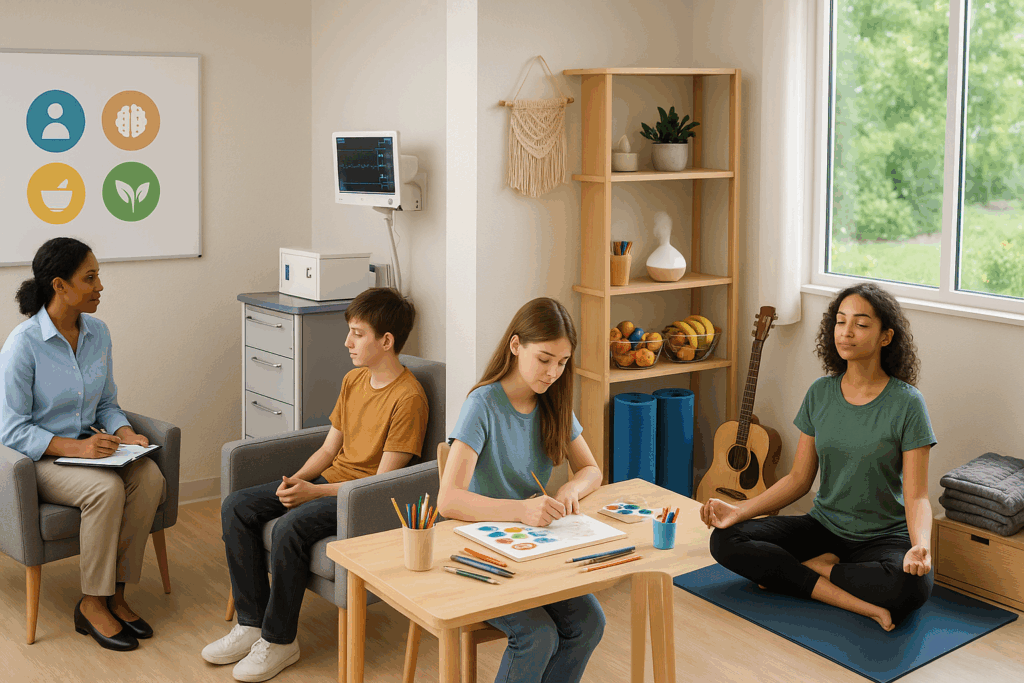
An adolescent IOP provides structured care several days a week, allowing teens to live at home while staying connected to school and family. Sessions include therapy groups, individual therapy, family sessions, and visits with a prescriber when needed. Teens practice skills in real life between sessions and bring feedback back to the team. Federal guidance describes IOP as a proven part of the continuum for substance use and co-occurring needs, often used as a step-down from higher care or a step-up from weekly therapy when symptoms rise.
Evidence also supports family involvement for adolescents. Teens do better when parents learn skills, set routines, and get simple tools for limits and communication. Reviews of youth treatment show strong support for family-based approaches that target the home environment along with the teen’s coping skills.
Evidence-based care means treatments are backed by research. For teens, that includes cognitive behavioral therapy, dialectical behavior therapy skills, motivational approaches, and family treatments. Studies and practice parameters show that these methods can lower symptoms and improve function in adolescents when delivered by trained teams.
Holistic supports help the science land. Sleep routines, movement blocks, balanced nutrition, and school support make it easier to use therapy skills. National sources on child and adolescent mental health and care transitions also highlight the value of safe handoffs, simple plans, and steady routines at home and school.
PHP is a full-day treatment without an overnight stay. Teens return home in the evening. When safety improves and symptoms decrease, a teen can transition from PHP to IOP. The IOP maintains structure, but with fewer hours, allowing teens to transition back into school and home routines. BNI offers both levels for adolescents, which support safer handoffs and fewer gaps.
Strong handoffs matter. AHRQ tools show that clear transitions reduce errors and prevent setbacks. Ask for a written plan, appointment dates, and direct communication between PHP and IOP staff. This lowers stress and keeps goals aligned across settings.
IOP days are built around skills practice. Teens work on thoughts, feelings, actions, and relationships. They learn to notice triggers, change unhelpful patterns, and use step-by-step tools when stress rises. DBT skills help with emotion regulation and safety. Research in adolescents shows DBT-based care can reduce self-harm and improve function.
Family time is built in. Parents practice coaching skills, calm communication, and fair limits. Family-based approaches, such as Multidimensional Family Therapy, aim to improve home routines and reduce conflict. Reviews support these methods for adolescents with mental health and substance-related needs.
Sleep, food, and physical activity all affect mood and attention. Short movement breaks in IOP can lift energy and focus. Balanced meals and hydration help with concentration. Simple sleep habits support next-day thinking and reduce irritability. National child mental health resources point families to daily routines as core supports.
School is a key part of life. Programs that include academic time and school coordination help teens avoid falling behind. BNI provides on-site academic support, enabling teens to stay on top of their coursework during higher care and plan for a smooth return to school upon completion of IOP and beyond.
Psychiatrists trained in child and adolescent care guide diagnosis, medication decisions, and safety plans. They work with therapists and families to create a single, clear plan. National resources explain common teen conditions and the need for developmentally informed care that fits school and family life.
BNI is physician-owned and psychiatrist-led, with care designed for teens aged 12–17. The program lists IOP and PHP among its levels of care, which supports safe step-ups and step-downs when symptoms change.
Start with safety and assessment.
If there is an urgent risk, call 988 or seek emergency care. For ongoing concerns, request an assessment that covers mood, anxiety, attention, substance use, school, and family. Federal manuals offer guidance on teen screening and assessment tools for substance use and co-occurring issues when present.
Match the level of care.
Use PHP when teens need a full-day structure. Step down to IOP when safety and function improve. Step down again to weekly therapy when symptoms are low and routines are steady. Keep family sessions and school plans active at every step.
Protect the handoffs
Ask for written summaries, contact info, and confirmed start dates before leaving each level. AHRQ care transition tools show that clear handoffs reduce errors and stress for families.
Adolescent-only setting with physician leadership
Programs specifically designed for teens handle school, family, and development more effectively than adult settings. Physician leadership adds medical and psychiatric oversight to complex plans.
Evidence-based core plus holistic supports
Ask how CBT, DBT skills, motivational strategies, and family therapies are used. Then ask how sleep, movement, nutrition, and school support are built into the week.
Clear the PHP to IOP pathway and school support
Strong programs can provide you with the daily schedule for each level, explain how step-downs work, and outline how school is managed. BNI lists PHP, IOP, and academic support pages for teens 12–17.
BNI Treatment Centers is psychiatrist-owned and led, serving adolescents 12–17 in Agoura Hills and Calabasas. The program offers a full continuum, including PHP and IOP, with on-site academic support. Facility tours show calm, home-like settings designed for teens, which can help engagement and reduce stress while skills are learned and practiced.
Parents can verify private commercial insurance benefits and request a confidential call to review fit and next steps. The admissions team can also assist with planning travel and coordinating school arrangements if needed.
If your teen needs structured help that fits school and family life, an adolescent IOP can be a steady path forward. In Los Angeles, BNI Treatment Centers offers psychiatrist-led PHP and IOP for ages 12–17 with on-site academic support in a home-like setting. You can review program details, take a virtual tour, and request a confidential call to talk through next steps.