When a teen has both a mental health condition and a substance use problem, it is called a dual diagnosis. Treating one problem without the …

When a teen has both a mental health condition and a substance use problem, it is called a dual diagnosis. Treating one problem without the other rarely works. Teens need an integrated plan that addresses both issues simultaneously. Adolescent Dual Diagnosis Treatment plan often includes medical care, family therapy, skill-building for school and life, and careful step-down support across levels of care, such as residential, PHP, and IOP, when medically and clinically appropriate. Research supports family-based care, cognitive-behavioral therapy, and integrated treatment delivered by a single team. Parents also need clear steps, regular updates, and a focus on safety. Suppose you are in the Los Angeles area or are willing to travel. In that case, BNI Treatment Centers offers psychiatrist-led care for adolescents aged 12–17, with defined paths across detox, residential, PHP, and IOP, plus academic support to ensure teens do not fall behind in school. In this guide, you will learn the signs of dual diagnosis, how teams assess and stabilize teens, what integrated treatment looks like at each level of care, and how academic and family support help recovery last. Keep reading to learn how to choose a safe plan that fits your teen and your family.
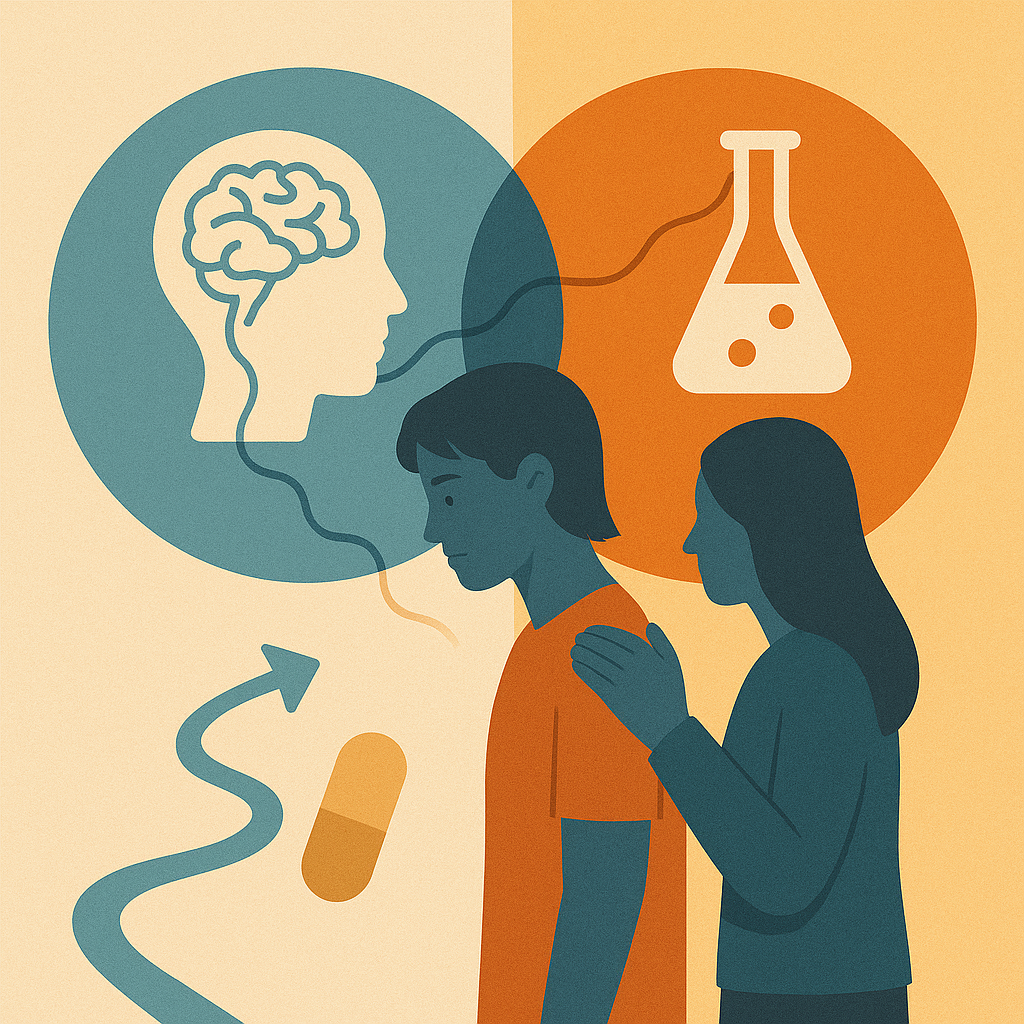
A dual diagnosis happens when a teen has both a mental health disorder and a substance use disorder at the same time. The conditions interact. Substance use can make mood, anxiety, or trauma symptoms worse. Mental health symptoms can also lead a teen to use substances to cope. Treating both together leads to better outcomes, especially in adolescents. National sources describe co-occurring disorders and why they need integrated care.
Teens are not small adults. Their brains are still developing. That is why the approach must be tailored to adolescents. Common co-occurring combinations include depression or anxiety with alcohol or cannabis, ADHD or conduct problems with nicotine or stimulants, and PTSD with alcohol or other substances. Evidence shows that addressing both disorders at the same time helps with retention in care and long-term results.
Integrated treatment means the same team treats both the mental health disorder and the substance use disorder, in one plan, with one set of goals. This lowers mixed messages and helps the teen and family stay engaged. Reviews and guidelines point to integrated care, family therapy, cognitive behavioral therapy, and dialectical behavior therapy skills as core parts of effective treatment for youth with co-occurring disorders.
Integrated care is also easier for parents. You get one plan, one team, and clear steps. Medication management, therapy, school support, and relapse prevention strategies align. For teens, the goal is not just symptom relief; it is also about achieving overall well-being. It involves building a safe and stable routine at home and in school.
A careful assessment guides the plan. Clinicians gather information from the teen, parents, school, and pediatric or psychiatric providers. They look at symptoms, safety risks, substance use patterns, medical needs, and school functioning. This process is called a differential diagnosis, and it helps the team understand which symptoms come from which disorder, and in what order to treat them.
When there is risk of harm, serious withdrawal concerns, or medical needs, stabilization comes first. That can include medical detox and monitoring if indicated, and early steps to lower risk, manage withdrawal, and start safer coping skills. National resources explain the need for integrated assessment and stabilization in co-occurring care.
Care should match the teen’s needs. Many teens move through levels of care as they improve. BNI Treatment Centers provides a clear path across adolescent detox, residential inpatient, partial hospitalization program, and intensive outpatient program, with academic support woven in, for ages 12–17.
Medical detox is short-term and focused on safety. It helps manage withdrawal and medical risks and prepares the teen for therapy. Not all teens need detox, but when they do, it should be adolescent-specific and medically supervised.
Detox is not a stand-alone cure. It is the first step on a longer path that includes therapy, family work, and relapse prevention. Teams follow evidence-based protocols and coordinate the next level of care to ensure a seamless transition from detox to treatment.
Residential treatment provides 24/7 structure and support when safety, medical needs, or symptom severity require a contained setting. For individuals with dual diagnosis, integrated care at the residential level enables therapy, medication management, skills training, and school support to work together in a single, safe setting.
Residential is also a time to involve the family in a focused way. Parents learn skills that they can use at home, like how to respond to cravings, set healthy limits, and support homework routines. Continuity planning begins on day one, allowing the teen to transition safely to PHP or IOP when ready.
A partial hospitalization program is a full-day treatment program where the teen returns home in the evening. PHP provides multiple therapy groups, individual therapy, psychiatry visits, family sessions, and academic time during the day. PHP fits teens who need more support than weekly therapy but do not need overnight care. National descriptions of PHP models for youth explain the structure and goals of this level of care.
PHP is often the step after residential. It helps the teen practice skills while living at home again. It also fosters family routines that align with school and community life. PHP is a crucial component of the step-down path for individuals with dual diagnoses.
An intensive outpatient program offers several days of structured therapy per week, allowing teens to attend school and live at home. IOP supports continued progress, relapse prevention, and school routines. It allows teams to adjust medications, reinforce coping skills, and work on specific goals each week.
IOP is also where families practice problem-solving. Parents learn how to respond to setbacks and maintain open communication. The team monitors risk and progress, and can step up care again if needed.
Several therapies have strong support for teens with co-occurring disorders. Family-based treatments, such as Multidimensional Family Therapy and cognitive behavioral therapy, are well-supported in research. DBT skills aid in emotion regulation, distress tolerance, and relationship management. These approaches can be used together and adapted for each teen.
Medication can also help when symptoms like depression, anxiety, ADHD, or mood instability are present. Medication management should be part of an integrated plan and done by qualified clinicians who understand adolescent development. National guidance emphasizes integrated psychosocial and medication approaches for youth, tailored to the individual and updated as progress is made.
School continuity matters to parents and teens. Falling behind increases stress and can trigger relapse. Programs that include academic support help teens stay on track and reduce the fear of long absences. BNI offers on-site academic support, allowing teens to continue learning during treatment and develop a plan for reintegrating into school.
Research supports continuity of care and coordinated services for youth. Linking treatment to school supports and smooth transitions helps protect gains and lowers dropout risk from treatment and school.
Parents are key partners. Teens perform better when their families are involved in assessment, goal setting, safety planning, and skills practice. Family sessions teach communication, limit setting, and ways to support homework and healthy routines. Evidence shows that family involvement improves outcomes for adolescent substance use treatment and co-occurring care.
At each step, parents receive clear updates and next steps. They learn how to monitor for warning signs and who to call if concerns arise. A calm, respectful tone and plain-language coaching foster trust and support the whole family’s recovery.
Some signs show that weekly therapy is not enough. Look for rapid mood swings, self-harm risk, suicidal ideation, severe anxiety, panic, trauma flashbacks, blackouts, heavy or frequent substance use, withdrawal symptoms, or school refusal. If several signs are present, a psychiatric evaluation can guide placement into the right level of care.
Federal and professional sources describe risks and recommend a comprehensive assessment when co-occurring disorders are suspected, especially in youth.
When a crisis hits, clear, simple steps help.
National resources offer more guidance on co-occurring disorders and how to seek help
Adolescents benefit when physicians trained in child and adolescent psychiatry lead care. They can adjust medications, coordinate medical and mental health needs, and guide complex plans that include family, school, and community. Programs designed solely for adults may overlook key developmental issues, such as school stress, peer dynamics, and family systems. BNI’s psychiatrist-owned and operated model centers adolescent needs and brings medical oversight into every level of care for ages 12–17.
Peer-reviewed reviews and practice parameters show that youth substance use and mental health treatment are most effective when tailored to adolescent development and when families are engaged from the start.
Families often worry about costs. BNI works with most major commercial insurance plans and does not accept Medi-Cal, Medicare, IEHP, Kaiser, or government state or county-funded insurance. You can verify benefits before committing to care, which helps plan next steps. BNI is located in Agoura Hills and Calabasas near Los Angeles, with convenient access for local families and those traveling by air.
If your teen is struggling with both mental health and substance use, you are not alone. Help is available, and an integrated, teen-specific plan can restore safety and hope. BNI Treatment Centers is a psychiatrist-owned and led program for adolescents 12–17 in Agoura Hills and Calabasas, offering medical detox, residential inpatient, PHP, IOP, and on-site academic support, with most major commercial insurance accepted and an easy benefits verification process. If you would like a confidential callback or a 24/7 phone consult, you can reach out at (888) 522-1504 and begin a clear, step-by-step plan for your family today.