An Overview of Typical Treatment Timelines When discussing mental healthcare for teens, it’s important to note that care is not a one-size-fits-all solution. In the …

When discussing mental healthcare for teens, it’s important to note that care is not a one-size-fits-all solution. In the initial hours and days after your teen experiences a crisis, it’s essential to provide them with evidence-based clinical support.
At BNI Treatment Centers, we know that teens face life-impacting challenges and mental health struggles every day. It’s our mission to provide the treatment they need post-crisis to achieve true healing. Today, we’ll cover what treatment looks like from crisis to recovery and what to expect every step of the way.
The immediate response to a crisis is to ensure your teen’s safety, assess their immediate risk, and reduce or relieve acute symptoms. This care varies depending on the severity of the crisis. Many children struggle with crises that can be kept relatively “under wraps”, including but not limited to extreme anxiety or depression, suicidal ideation, and drug or alcohol addiction. Teens facing these serious mental health issues benefit the most from early intervention.
Potential signs that your teen may require immediate care and is undergoing a crisis include, but are not limited to:
Every teen experiences a crisis differently; their unique situation, the setting in which it occurs, and the resources available all impact the way treatment affects your child. The most dire risk is that of suicidal ideation, a concrete plan, or an attempt. According to studies, 12.3% of teens aged 12 to 17 had serious thoughts of suicide in 2023, with an estimated 3.3% of those teens making an attempt on their lives. Among teens who experience suicidal ideation, early intervention and access to immediate care are critical to reduce the risk of harm.
BNI Treatment Center professionals work hard to ensure your teen’s immediate safety as your child transitions from the initial response to crisis to stabilization and treatment.
Once your teen has been safely secured, assessed, and placed on an individual emergency safety plan, their care team can begin working towards stabilization. During this phase, which can take anywhere from days to several weeks, teens receive treatment to help reduce their symptoms to a manageable level, confirm their diagnoses, and begin medication adjustments.
Therapy is a crucial part of the stabilization phase as teens gain a better understanding of themselves, their mental health challenges, and the resources available to help them heal. Frequent medical check-ins and mental health evaluations monitor progress and identify potential roadblocks to success. The care team will include families with initial psychoeducation on their child’s specific diagnosis, a written safety plan, and referrals to community resources.
Once your teen has been stabilized and is no longer in immediate danger, their care team will help choose between treatment types. Many teens need a higher level of care post-crisis than typical weekly therapy appointments. In particular, mental health options that parents should consider include:
Intensive Outpatient Programs: A level of intensive support requiring about nine hours per week of therapy and other support activities.
Partial Hospitalization Programs (PHPs): The highest level of outpatient care available, PHPs require approximately 30 hours of participation in various types of therapy, including group, individual, and family therapy. Typically lasts for two to three weeks.
Residential Treatment Programs: Inpatient programs provide intense 24-hour support and monitoring. A wide range of therapies, daily activities, and resources are available to help teens thrive and reach their full potential. Enrolled students receive academic support.
Adolescence is a crucial period in our lives during which we develop lifelong skills, habits, and self-understanding. During acute treatment, your teen’s caregiving team focuses on reducing the core symptoms, building up your teen’s coping skills, and restoring a daily routine that promotes health and wellness. Structure is crucial during this period and is provided through consistent routines and therapy sessions.
Incremental progress during this stage looks like:
Depending on the type of care your family pursues, the exact day-to-day life of your teen during recovery will look different. For those engaged in outpatient care, the stressors of living at home remain in tandem with healing from their crisis. Residential care provides relief from day-to-day triggers and stress, but may not fit with the schedule, culture, and financial means of every family.
Many factors can lengthen this phase of care, as well as all other phases. Complex home environments, insurance limits, delayed access to specialized care, and co-occurring diagnoses all must be worked around in order to deliver quality care. On the other hand, rapid engagement and strong family support can help streamline care.
Ultimately, the transition from ongoing, serious clinical support to a stable, day-to-day life varies for each patient. Effective expectation management is crucial during the transition phase to maintain high morale; success is not linear when recovering from a crisis. Your teen’s care team will work with them to help manage their expectations, set goals using a framework that supports and encourages them, and use practical, everyday recovery markers to gauge when the time is right to move to the next tier of lower, ongoing support.
Continuity of care is essential while your teen adjusts to daily life outside of their residential program or outpatient schedule. It takes hard work and ongoing support from family, friends, and a care team to reinforce the therapeutic gains made during recovery. Proper support and monitoring reduce the risk of relapse and further crisis.
Ongoing support will vary in form for each adolescent. As they develop skills and learn coping mechanisms, many teens transition to weekly or monthly therapy over time. Others may need ongoing peer and support groups for their mental health challenges. Those at risk of relapse into addiction are encouraged to continue to seek out peer support as well. When surrounded by others who are experiencing the same issues, teenagers often feel less alone and can face their own challenges with more confidence.
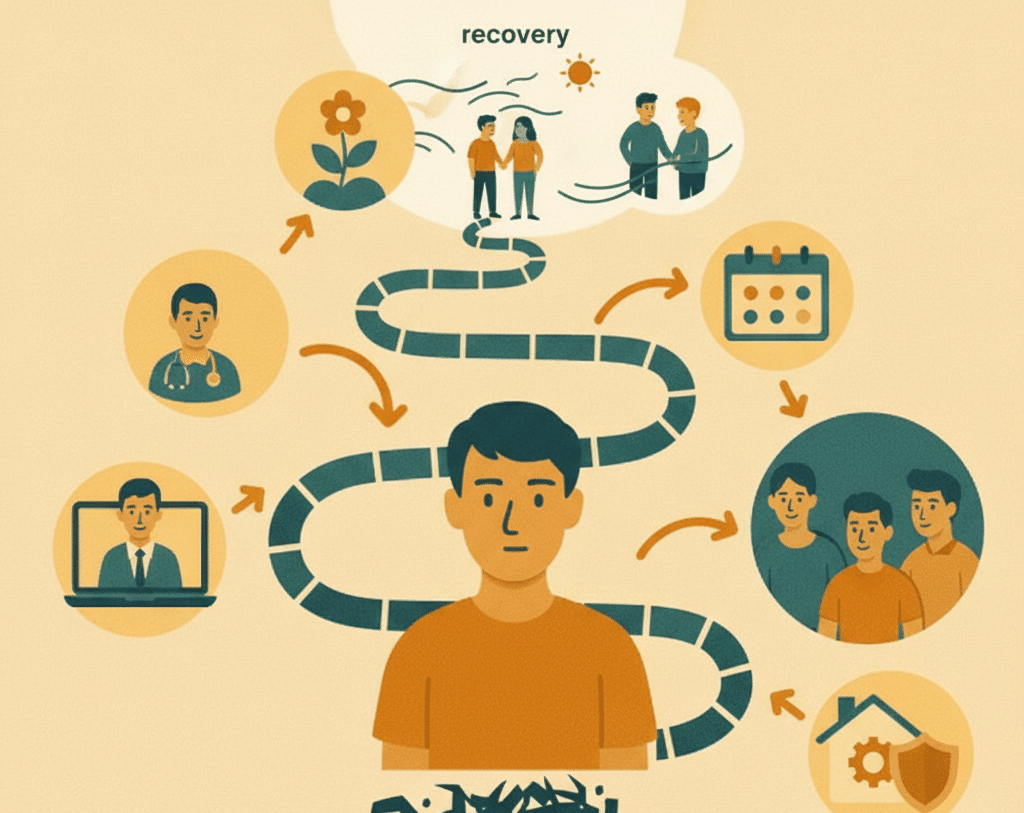
In the end, the exact timeline for your teen’s recovery from their crisis is difficult to determine until well into treatment. The most critical first step is to reduce immediate risk and stabilize a teen experiencing a crisis. From there, a compassionate and evidence-based approach to recovery will allow them to heal at their own pace. To encourage recovery, realistic goals and benchmarks will be established to gauge the patient’s progress and reaction to treatment.
Our team at BNI Treatment Centers understands that every teenager experiences a unique recovery timeline. BNI Treatment Centers is a doctor-owned and operated mental health treatment center specializing in care for teens. Our team is happy to answer your questions and discuss how we can help your teen recover from a crisis. Contact us today at (888) 522-1504 to get started.